
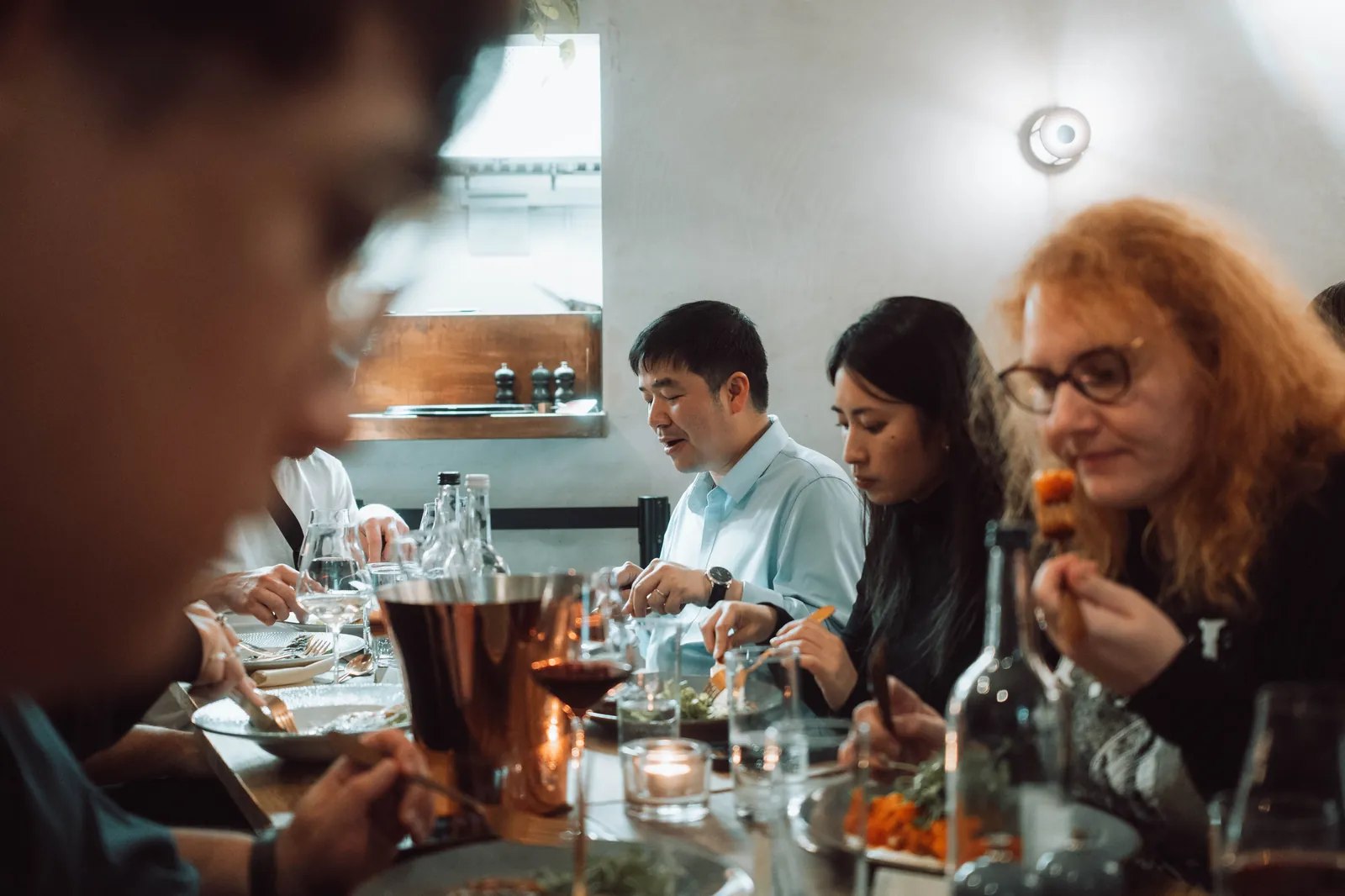
My family eats out two or three times a week, and almost every time, someone eventually types the four words that kill a group chat: “where do you want to eat.” My usual reply is just as useless: “I’m easy, you pick.” So I have spent an embarrassing amount of time hunting for a good restaurant picker, some tool or trick that gets six hungry people from nothing to a plan without the twenty minute stall.
Here is the short version, before I talk myself out of it. A restaurant picker is any tool or rule that turns “I don’t know, where do you want to go” into one real answer. The fastest honest one for a group is a quick, informed vote. A random wheel works too, but mostly when you are alone or breaking a tie. Those are two different jobs, and most pickers only do the second one.
A random wheel picks a restaurant, not a good one
Most of the pickers you will find are wheels. You drop in a few places, spin, and physics hands you an answer. I get the appeal. A wheel removes the fight, because nobody chose, the wheel did, so nobody can be blamed for the result.
But look at what it removed along with the fight. It removed everyone’s input. It outsources the call to physics. A wheel is great at picking a restaurant and useless at picking a good one for the people at the table, because it never asked them anything. You can land on the place your friend can’t eat at, or the spot that’s closed on Mondays, and the wheel does not care.
For one person who just wants to stop thinking, that trade is fine. For a group, you usually want the opposite: less randomness, more of what people actually want, just faster.
Why picking where to eat is so hard
It helps to know why this stalls, because the fix follows from the cause. Two things are working against you.
First, too many options. Once a list gets long, every place you add makes the decision feel worse, not better, an effect researchers call choice overload. Six restaurants does not register as six good odds. It registers as five ways to be wrong.
Second, timing. You are deciding this at the exact moment everyone is hungry and patience is gone, which is about the worst time to ask a tired brain to weigh options. Decision fatigue is real, and “where should we eat” lands right in the middle of it.
Put those together and you get the usual result: a long list, low energy, and a group that would rather say “I’m easy” than do the work of having a preference.
A restaurant picker that actually works for a group
The process is short. The trick is doing the boring parts on purpose instead of letting the group chat do them badly.
Set the boundaries first
Before anyone names a place, agree on the box: budget, how far you will drive, and any dietary must-haves. Dietary restrictions alone can cut a list in half in one move. The tighter the box, the fewer fake options you waste time arguing about.
Cut the list to a handful
Rule of thumb: three to five places. Fewer than three is not a choice, it is a formality. More than five and you are back in choice overload, staring at a menu of menus.
Vote privately, all at once
Everyone picks at the same time, nobody watches a running tally pull them along, and the quiet people actually weigh in. A private ballot is the only way the easy-going folks ever tell you what they really want. I would know.
Only spin to break a tie
If two places end up dead even, that is the one moment randomness earns its keep. Flip a coin, spin a wheel, settle it, and go. Save the randomness for the tie, not the whole decision.
Put the menu in the vote, not the homework
Here is the part almost every picker gets wrong, and I’ll be real, it is the part I care about most. The options are just names.
You should not have to do homework to cast an honest vote.
Think about what “vote for the Thai place on 5th” actually asks of someone. To have a real opinion, they would have to look up the menu, check the price, and see if it is even open tonight. Nobody is doing that for five restaurants on their phone while everyone waits. So they don’t. They vote on the name, or they shrug and pick whatever, and you are right back to an uninformed guess.
The fix is to move the homework into the vote. Each option carries its own menu, its price, a photo, the rating, whether it is open right now. Then having an opinion costs a glance instead of a research project, and people vote on the actual place rather than the vibe of its name. A wheel cannot do this. It hands you a name and wishes you luck.
When a random pick is the right call
I am not going to pretend a vote is always the answer. Sometimes the wheel wins, and saying so is the honest part.
- If it’s just you, there is nothing to coordinate. Spin away, or walk to the nearest place that looks good.
- If it’s two of you, just talk. A two-person dinner is a conversation, not an election. You do not need a tool for it.
- If the group genuinely doesn’t care, a coin flip is faster than any process, and nobody will mind where it lands.
Even with a vote, ties happen, and a tie is the one place randomness belongs. (Decide has a small prize wheel built in for exactly that, a weighted spin to settle a dead heat without running the whole thing again.) The simple version: a wheel is for ties, full stop.
The restaurant picker I ended up building
You can run all of this in a group chat with a show of hands. People picked restaurants for a long time before apps existed. But the boring middle part, where you narrow the list, add the detail, and count the votes, is exactly what a phone should do for you, and exactly what a chat is worst at. That is why I built Decide.
You frame the question, drop in a few places, and share one link. For restaurants, each option pulls its own detail automatically: the rating, the price, a photo, the address, whether it is open now. So people vote informed instead of guessing. Everyone swipes through the options, no app and no login, and the results update live as votes land. Voting is always free and never needs an account; the paid plans are for creators who want more. If you want the longer version of the process, I wrote a whole post on making a group decision without the group chat.
Common questions about picking a restaurant
Why is deciding where to eat so hard? Two reasons stack up: too many options make every choice feel worse, and you are usually deciding while hungry and out of patience. Shrinking the list and putting a clock on it fixes most of it.
How do you decide where to eat as a group? Set the constraints, cut to three to five real options, give each one enough detail to judge, then vote all at once instead of one loud voice at a time.
What if nobody has a preference? Then a wheel or a coin flip is genuinely fine. The trouble is most “nobody cares” groups do have preferences, they are just too polite to say them out loud. A private vote tends to surface them.
What’s the fastest way to pick a restaurant? A shared vote where every option carries its own info, so people can have an opinion in a glance and the count happens for you.
My family still eats out a couple of times a week, and I still say “I’m easy” when they ask. The difference is there is a link in the chat now. Everyone taps through a few places, the count happens on its own, and we have a plan before anyone gets hangry. The wheel can keep spinning for the nights I’m eating alone.